cv DE CV EN CV
Profile
| Name | Tobias Fischbach |
| Label | Computational Researcher · Quantum Computing · Quantum Circuit Optimization |
| fischbach.tobias-michael@outlook.com | |
| Url | https://tobias-fischbach.de |
| Profiles |
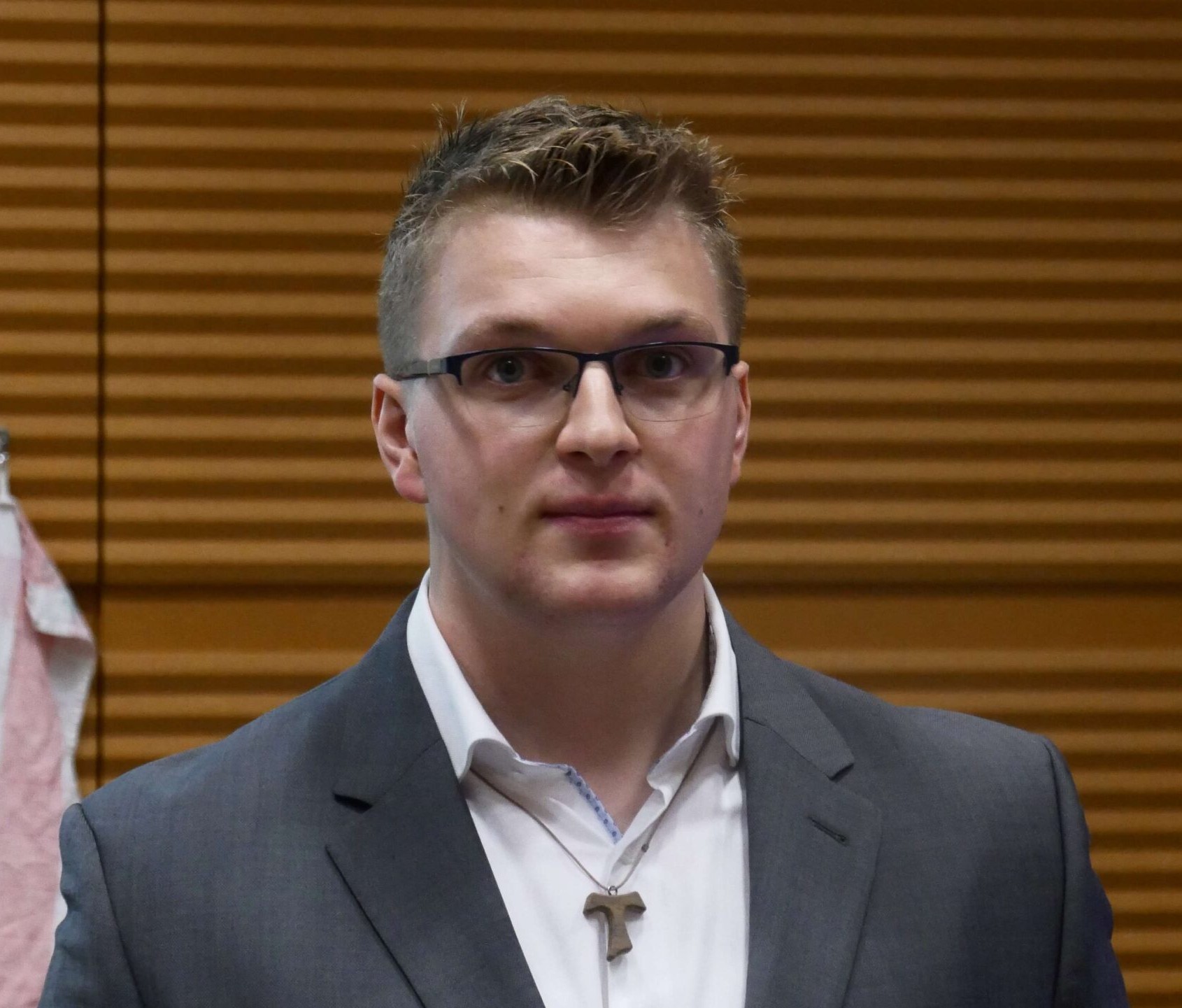
Computational researcher in quantum computing and quantum circuit optimization with expertise in search algorithms, ZX-calculus, scientific computing, and reproducible research infrastructure. Experienced in designing optimization frameworks, scaling computational experiments on HPC systems, and developing extensible tooling in Python, C++, and Linux/NixOS ecosystems. Strong interdisciplinary background across quantum computing, computational physics, simulation, teaching, and scientific communication.
Selected Achievements
-
Doctorate defended in quantum circuit optimization on April 28, 2026
University of Luxembourg
Research spanning ZX-calculus, quantum circuit optimization, search algorithms, mathematical optimization, and scientific computing.
-
3 bachelor's degrees, 2 master's degrees, and a doctorate defended in 2026
Luxembourg, Germany, and France
International physics and computer science education across German-, French-, and English-speaking academic systems.
-
Young Academics Grant recipient
Institute of Advanced Studies Luxembourg
YOUNG ACADEMICS-2022-NETCOM
-
Best poster award, PhD Day 2023, 2nd place
University of Luxembourg
-
Reproducible HPC experiments scaling to 3200 CPUs
Work
-
2022 - 2026.04 Doctoral Researcher
University of Luxembourg
- Formalized metric-independent quantum circuit optimization in the ZX-calculus setting.
- Developed search algorithms targeting two-qubit and T-gate reductions in ZX-diagram optimization.
- Designed an extensible ZX-calculus-based quantum circuit optimization framework integrating with existing transpilation pipelines.
- Taught discrete mathematics with a focus on intuition, rigor, and applicability.
- Mentored master's students on predicting software energy consumption with neural networks.
- Recipient of the Young Academics grant from the Institute of Advanced Studies Luxembourg (YOUNG ACADEMICS-2022-NETCOM)
- Won second place in the PhD Day 2023 best poster award.
-
2020 - 2022 Research Assistant
University of Luxembourg
- Implemented high-performance stochastic simulation software in modern C++.
- Executed reproducible large-scale stochastic simulation experiments across 3200 CPUs on HPC infrastructure.
- Developed automated visualization pipelines for large-scale simulation analysis.
Education
-
Doctorate
-
2022 - 2026.04 Luxembourg, LU
Doctoral Researcher / PhD
University of Luxembourg
Quantum circuit optimization, ZX calculus, search algorithms, scientific computing
- Thesis: "End-to-End Quantum Circuit Optimization using ZX-Calculus"
- Thesis defended on April 28, 2026
-
Double Master's Degrees
-
2019 - 2022 Saarbrücken, DE
M.Sc. Physics
Universität des Saarlandes
Computational biophysics, molecular dynamics simulation
- Thesis: "Hydration shell of intrinsically disordered proteins"
-
2019 - 2022 Luxembourg, LU
-
Triple Bachelor's Degrees
-
2014 - 2019 Saarbrücken, DE
B.Sc. Physics
Universität des Saarlandes
Physics
- Thesis: "Molekulardynamik Simulationen von Hydrophobin-Doppelschichten"
-
2014 - 2019 Luxembourg, LU
Bachelor en Science et Ingénierie
University of Luxembourg
Filière physique
-
2014 - 2019 Nancy, FR
Licence Physique-Chimie
Université de Lorraine
Parcours physique
-
International physics education across German-, French-, and English-speaking academic systems.
Selected Publications
-
2026.01.06 How protein hydration depends on amino acid composition, peptide conformation, and force fields
Johanna-Barbara Linse, Tobias Michael Fischbach and Jochen Sebastian Hub
Biophysical Journal
-
2026.01.03 Exhaustive Search for Quantum Circuit Optimization using ZX Calculus
Tobias Michael Fischbach, Pierre Talbot and Pascal Bouvry
International Conference on Optimization and Learning (OLA2025)
-
2025.09.25 A Review on Quantum Circuit Optimization using ZX-Calculus
Tobias Michael Fischbach, Pierre Talbot and Pascal Bouvry
-
2023.05.10 Challenges in Automatic Software Optimization: the Energy Efficiency Case
Tobias Michael Fischbach, Emmanuel Kieffer and Pascal Bouvry
International Conference on Optimization and Learning (OLA2023)
Technical Skills
| Languages | |
| Python | |
| C++ | |
| Bash | |
| Julia | |
| Nix |
| Quantum & Scientific Computing | |
| Qiskit | |
| PyZX | |
| NumPy | |
| Pandas | |
| Matplotlib | |
| scikit-learn |
| Systems & Infrastructure | |
| Linux | |
| NixOS | |
| HPC | |
| OpenMP | |
| MPI | |
| Reproducible Environments |
| Research Areas | |
| Quantum Circuit Optimization | |
| ZX Calculus | |
| Search Algorithms | |
| Monte Carlo Simulation | |
| Computational Physics |
| Communication | |
| Teaching | |
| Mentoring | |
| Scientific Writing | |
| Visualization |
Languages
| German | |
| Native speaker |
| English | |
| Fluent |
| French | |
| Advanced |
| Spanish | |
| Intermediate |
Interests
| Academic Interests | |
| Quantum Computing | |
| Quantum Circuit Optimization | |
| ZX-Calculus | |
| Combinatorial Optimization | |
| Computational Biophysics | |
| High-Performance Computing |
| Other Interests | |
| Programming & NixOS | |
| Playing Rugby | |
| Running | |
| Weightlifting | |
| Learning Languages |
Selected Projects
- 2024 - Present
Quantum Circuit Optimization Framework Using ZX Calculus
Framework for end-to-end quantum circuit optimization using ZX-calculus-based rewriting and search.
- Implemented standard search strategies including depth-first search, iterative deepening depth-first search, limited discrepancy search, and lexicographic search.
- Developed a local-elimination algorithm targeting T-gate reductions and practical state-space decomposition.
- Introduced pruning conditions for tractable state-space exploration under non-terminating rewrite systems.
- Integrated the framework with existing quantum compilation and transpilation pipelines under reproducible experiment workflows.
- 2024 - Present
Declarative Firefox Addons for NixOS and Home-Manager
Open-source infrastructure for declarative Firefox add-on management in NixOS and Home Manager.
- Maintain a repository with approximately 40,000 Nix derivations for Firefox add-ons.
- Built and automated the scraper pipeline that keeps add-on metadata and derivations up to date.
- Contributed upstream tooling to automatically generate the Zotero derivation.
- 2022 - 2024
Measuring the Energy Consumption of Computation
Research infrastructure for studying software energy consumption under controlled experimental conditions.
- Built measurement infrastructure by adding current sensors to standard x86 motherboards.
- Synchronized physical power measurements with perf-based software measurements.
- Created a minimal Linux/NixOS-based environment to reduce runtime variability and improve reproducibility.
- 2020 - 2022
Modern Stochastic Simulation Algorithms
Large-scale simulation tooling for chemical reaction networks and rare-event sampling.
- Implemented Monte Carlo simulation methods for chemical reaction networks with rare-event sampling.
- Developed scalable software in modern C++ with OpenMP and MPI support.
- Analyzed non-equilibrium network current and entropy production in computational experiments.
- Executed reproducible large-scale experiments on HPC systems with up to 3200 CPUs.
- 2020 - 2022
Hydration Shell Score of Intrinsically Disordered Proteins
Computational biophysics project combining simulation, automation, and quantitative protein analysis.
- Simulated intrinsically disordered proteins with Gromacs for hydration-shell analysis.
- Automated protein structure generation across varying surface amino-acid configurations.
- Developed an amino-acid score to quantify impact on SAXS measurements.
- Automated simulation and data-analysis workflows.
Talks
-
2026.04.28 End-to-End Quantum Circuit Optimization using ZX-Calculus
Tobias M. Fischbach
PhD Defense, University of Luxembourg
Defense talk presenting an end-to-end ZX-based optimization pipeline that combines metric-agnostic diagram rewriting with extraction-aware optimization and benchmarking.
-
2026.02.02 A Review on Quantum Circuit Optimization using ZX-Calculus
Tobias M. Fischbach, Pierre Talbot, and Pascal Bouvry
International ZX-Seminar
Overview talk on ZX-based quantum circuit optimization and introduction of the ZX-Benchmark framework.
-
2025.09.01 EQAI 2025: Exhaustive Search for Quantum Circuit Optimization using ZX Calculus
Tobias M. Fischbach, Pierre Talbot, and Pascal Bouvry
EQAI 2025 Summer School Poster
Poster presentation on exhaustive search for ZX-diagram optimization and the case for smarter search strategies, including machine learning support. Honorable mention.
-
2025.05.18 OLA 2025: Exhaustive Search for Quantum Circuit Optimization using ZX Calculus
Tobias M. Fischbach, Pierre Talbot, and Pascal Bouvry
International Conference on Optimization and Learning 2025
Conference talk on exact search methods for optimizing quantum circuits with ZX-calculus.
-
2023.05.05 OLA 2023: Challenges in Automatic Software Optimization: the Energy Efficiency Case
Tobias M. Fischbach, Emmanuel Kieffer, and Pascal Bouvry
International Conference on Optimization and Learning 2023
Conference talk on energy-aware optimization of software using LLVM compiler passes.